Why do some brands feel unforgettable while others fade away?
In 2026, the attention is brief and the competition is high. Each day people are exposed to thousands of marketing messages. Most are ignored. It is found that one out of every five consumers require trusting a brand in order to make a purchase. In another study, it was possible to increase revenue by 23 percent through consistent branding. That is not luck. That is a Branding Strategy at work.
The lack of content is not the issue. It is a lack of clarity. Most businesses are posting every day and yet are not recognized. Without clear branding strategies, marketing feels random and disconnected.
The answer is easy but effective. Build a strong branding strategy. Choose the right brand positioning strategy. Execute it with consistency. In this guide, you will learn which branding strategies work best, see real branding strategies examples, and understand how to select the right business branding solutions for long term growth.
What is a Branding Strategy?
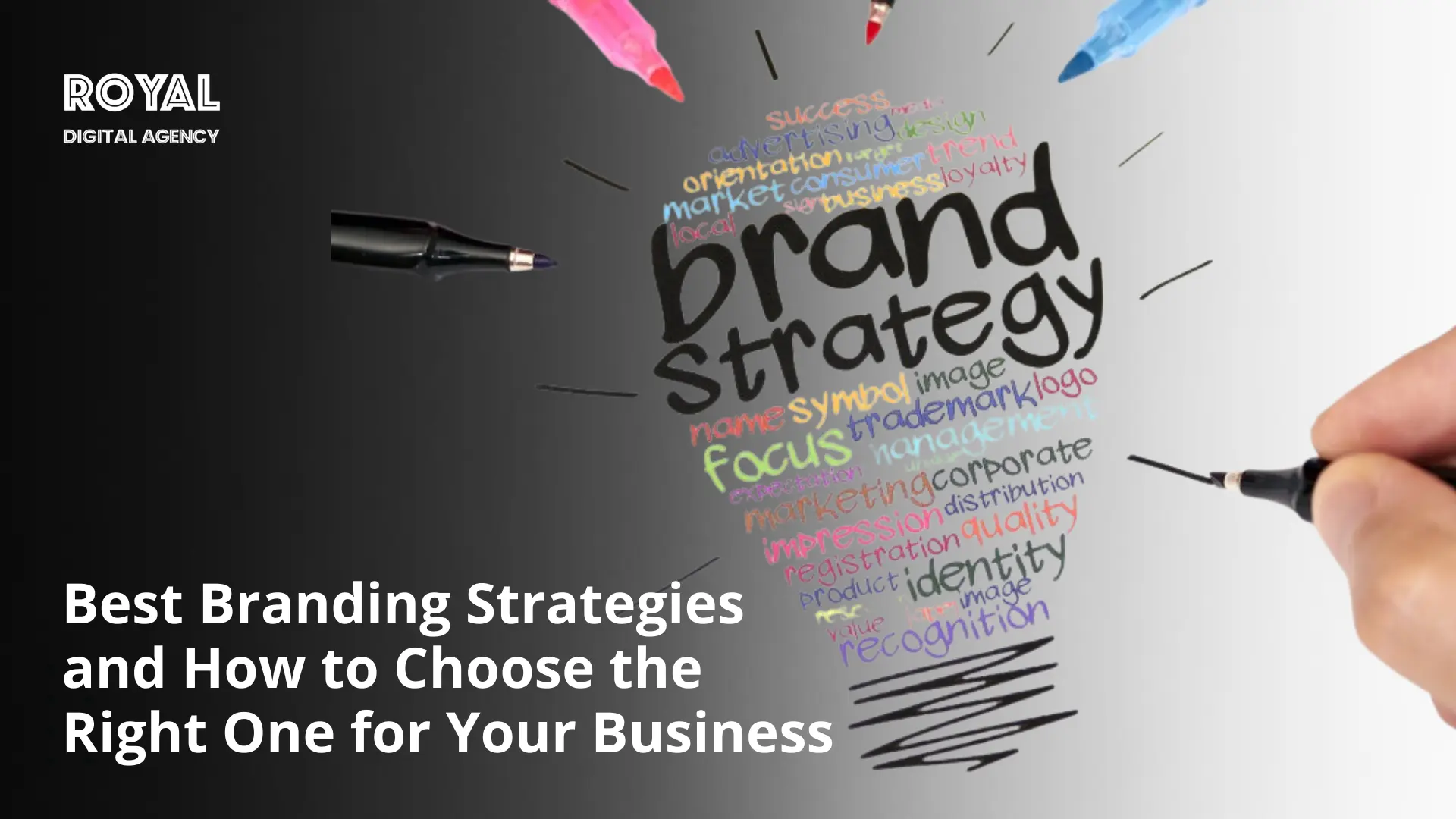
A branding strategy is a long term plan that shapes how people see and feel about your business. It forms your image in the market, your beliefs, your tone, and what you promise to your customers.
In simple words, a branding strategy answers three questions:
- Who are we
- What do we stand for
- Why would customers prefer us?
Branding strategies in marketing guide every communication decision. They impact your site, advertisements, social media, packaging and customer support.

Branding Strategy Vs Brand Identity
Many people confuse branding strategy with brand identity. There is a relationship, but not an identity.
- Brand identity includes your logo, colors, typography, and visual elements. It is what people see.
- Branding strategy is the reason behind those choices. It is the way in which you apply identity as a way of making meaning and perception.
For example, if your brand positioning strategy focuses on luxury, your visuals will feel premium. Your communications will be polished. Your experience with our customers will be exclusive.
Why Branding Strategies Matter for Business Growth in 2026
Branding strategies are more than labels or design. They are a necessity in businesses in 2026. An effective strategy forms brand awareness and makes customers identify a number of values with your business.
Brand Recognition and Recall
Regular branding simplifies the recall of the business. Research indicates that regular brand presentation generates revenue up to 23 percent. The faster recognition occurs when graphics and messages are aligned on platforms. Individuals do not make purchases that they do not recall.
Trust and Credibility
Trust drives sales. Statistics indicate that more than eighty percent of buyers must have confidence in a brand in order to make a consumer decision. The element that develops trust is consistency in message, positioning and experience that can be trusted. A strong branding strategy builds credibility over time.
Strong Brand Positioning Strategy
A clear brand positioning strategy differentiates you from competitors. It is the reason why you are different and better. When you have no positioning, you are competing on price. Under positioning, you are competing on value.
Higher Brand Equity
Brand equity means the value people associate with your name. Strong branding strategies increase perceived value. That results in an increased pricing strength and loyalty.
Clear Direction for Marketing
Branding strategies in marketing act like a compass. They lead campaigns, message, tone and content. In the absence of strategy, marketing is disjointed. Every effort works with momentum with strategy.
The Most Effective Branding Strategies in Marketing
There is no single perfect strategy. The correct one will be based on your business model, objectives and audience. Below are the most effective branding strategies examples in 2026.
Corporate Branding Strategy
Corporate branding strategy focuses on building the reputation, personality, and credibility of the entire company rather than promoting individual products. It highlights mission, values, culture, and long term vision to strengthen emotional connection and create a powerful, unified brand identity.
Example: Apple is a leading branding strategy example. Devices are not the only products sold by Apple. It embraces innovativeness, creativity and simplicity. The launch of every product strengthens its corporate philosophy. The customers identify with what Apple is, rather than with what it offers.
What It Includes: Corporate branding includes leadership messaging, internal culture alignment, employee advocacy, public relations strategy, visual consistency, and long term storytelling. It links the internal teams to the outside communication. It makes sure that there is customer experience on values.
Best For: This branding strategy works best for enterprises, technology firms, multinational organizations, and companies offering multiple products or services. It is ideal for businesses seeking authority, credibility, and strong brand positioning strategy at a global scale.
Product Branding Strategy
Product branding strategy focuses on developing a distinct identity for a specific product or product line. It focuses on recognizing the visuals, emotional appeal and differentiation in competitive markets to create awareness, demand and customer preference.
Example: Coca Cola is one of the strongest branding strategies examples. It has a recognizable color scheme (red), logo, and shaped bottle. Customers recognize the product even in the absence of a text. The brand power is contained in the product itself.
What It Includes: Product branding includes unique packaging, consistent advertising themes, product specific messaging, design differentiation, and emotional storytelling around benefits. It usually entails localized campaigns where a single hero is being offered.
Best For: The strategy is effective with consumer goods brands, ecommerce companies, or any startup trying to roll out flagship products, and companies with a presence in a consensual retail market where visual prominence is vital.
Service Branding Strategy
Service branding strategy builds a reputation around customer experience rather than physical products. It conveys dependability, promptness, and professionalism and leaves the service provider as a dependable and goal-oriented individual in the market.
Example: Geico has made insurance a memorable brand with a basic savings pledge and a well-known personality. Chick fil A has branded itself with good and steady service. They both demonstrate the role of experience in defining perception.
What It Includes: Service branding includes tone of communication, response time standards, testimonials, guarantees, client onboarding experience, and service delivery systems. Each experience will strengthen the brand promise.
Best For: It is a strategy that best suits agencies, consultants, SaaS business, law firms, healthcare providers, financial services and local businesses where trust and experience have a direct influence on purchasing decisions.
Personal Branding Strategy
Personal branding strategy centers on building authority and credibility around an individual. It makes an individual a thought leader, expert, or innovator, which are the areas of influence and business opportunities as a basis of trust.
Example: The personal brand of Elon Musk influences the general opinion about Tesla and SpaceX. Seth Godin acquired authority by providing regular educational material and message. Their name alone makes an impact on the market.
What It Includes: Personal branding involves consistent voice, social media presence, speaking engagements, interviews, educational content, media exposure, and clear point of view. It needs credibility and evident skill.
Best For: This strategy is ideal for entrepreneurs, founders, consultants, coaches, speakers, creators, and executives who want to leverage personal reputation to drive business branding solutions.
Retail and Geographical Branding Strategy
Retail and geographical branding strategies focus on creating a consistent customer experience within physical locations or specific regions. They connect brand identity with local culture, environment, and community to build relevance and familiarity.
Example: Walmart has uniform store format and appearance across the globe. McDonald localises menus to the markets but retains the essence. Both demonstrate how location influences branding strategies in marketing.
What It Includes: Retail branding involves store design, layout design, selection of music, in store signage, packaging and digital alignment. Geographical branding incorporates regional messaging, local partnerships, cultural relevance, and market adaptation.
Best For: This strategy works well for franchises, hospitality brands, local businesses, tourism companies, and international brands expanding into new territories while maintaining strong brand positioning strategy.
Co Branding Strategy
Co branding strategy is a collaborative marketing approach where two or more brands partner to create shared value. It brings together people, resources and credibility together to build brand awareness and growth to both sides.
Example: Uber has collaborated with Spotify to enable customers to play music during their tours. This partnership provided a one of kind experience and increased exposure to both companies.
What It Includes: Co branding incorporates joint campaigns, co message, cross promotion, joint product development, co sponsored events and integrated online marketing activities.
Best For: The approach allows brands entering new markets, introducing new products, or wanting to grow their audiences more quickly by finding partners with whom they can collaborate.
Online Branding Strategy
Online branding strategy shapes how a company appears across digital platforms. It guarantees uniformity in messages, visual recognition as well as consumer interaction across websites, social media, search engines, and online communities.
Example: Digital storytelling and user generated content have been utilized to enhance brand community at Starbucks. Its social media, mobile application, and its site demonstrate a time-honored identity and voice.
What It Includes: Online branding includes SEO content marketing, website optimization, email campaigns, paid advertising, social media strategy, reputation management, and digital customer interaction.
Best For: This approach works best for ecommerce brands, startups, SaaS businesses, global companies, and any organization prioritizing digital first business branding solutions in 2026.
Minimalist and No Brand Branding Strategy
Minimalist branding strategy emphasizes simplicity, clarity, and restrained design. It eliminates all that is unnecessary and enables products or values to communicate directly, which produces a serene and contemporary brand image in aesthetically busy markets.
Example: Minimalism is represented by the clean design and neutral color scheme of Apple. The brands such as m f people employ minimal packaging and message to convey focus and deliberateness.
What It Includes: This approach involves reduced logos, color palette, typeface, uncomplicated packaging, narrowed messages, and simplified graphics.
Best For: Minimalist branding works best for technology startups, wellness brands, design focused companies, lifestyle products, and businesses targeting modern consumers who value simplicity.

Modern Branding Strategies Winning in 2026
In 2026, branding moves fast because culture and tech move fast. Many brands still chase clicks and speed. That often backfires. People now filter brands through trust, values, and experience. In fact, 81% of consumers say they need to trust a brand to buy from it, and 86% say authenticity matters when choosing brands.
The following are the trends that are influencing what is currently working:
Authenticity and transparency first: Customers desire truth, although not ideal. One study on transparency identified 94 percent of consumers who are more loyal to a brand that has gone through transparency.
Purpose-driven brand positioning strategy: Individuals would like to understand what you represent, and not what you market. Purpose is expressed in your messages, relationships and customer experience.
Sustainability and circular thinking: Environmental issues influence the purchasing decisions and development. A commonly quoted Nielsen stat indicates that 73% of millennials will be willing to pay more on sustainable offerings. This also drives circular and regenerative design, in which brands minimise waste and re- create value.
Inclusive and culturally aware marketing: Representation is no longer voluntary. The Adobe research revealed that 61 percent of the consumers believe that diversity in advertising matters to them.
Data-led decisions and predictive planning: There is a movement towards trend forecasting towards being more scientific. Analytics help brands to determine where to invest and what will be required next by the customers.
Tech-powered experiences that still feel human: AI, personalization, AR and microinteractions have the potential to enhance connection but only in the case when they complement and not substitute the brand story.
How to Select the Best Branding Strategies for Your Business
Follow these steps to select the best business branding solutions for your company.
Define Your Brand Identity
Before selecting a branding strategy, clearly define your brand identity. This move forms the basis of good brand positioning.
Ask yourself:
- What are our core values and mission?
- What do we want customers to tell about us?
- What do we want to be known for in our industry?
- What makes us different from competitors?
- Where do we want our brand to be visual and feel like?
Answering these questions helps clarify your market direction and ensures your branding strategy reflects your true identity.
Determine Your Brand Objectives
As soon as it becomes known who you are, set quantifiable goals. Your goal might be to increase brand awareness, strengthen customer loyalty, dominate a product category, or expand into new markets. Clear objectives help you choose the most effective branding strategies examples that align with your growth plan.
Define Your Target Audience
Know with whom you are dealing. Consider demographics, interests, challenges, location and buying behavior. Strong branding strategies work best when they speak directly to a defined audience.
Consider Your Industry and Competitors
Each industry comes with its own expectation and competition. Study your competitors’ brand positioning strategy. Determine gaps, strengths and opportunities. This analysis helps you choose branding strategies that differentiate your business effectively.
Best Practices for Executing Branding Strategies
Development of a powerful brand is time consuming. As your credibility and reputation grow, your brand positioning strategy becomes stronger. Successful branding strategies are not built overnight. They need stability, transparency and confidence. Follow these best practices to strengthen your branding strategy and build long term authority.
Perfect Your Use of Visual Content
Visuals play a major role in branding strategies in marketing. Individuals perceive images more quickly than text. HubSpot states that visual content is much easier to remember, and infographics are also better remembered and shared on social media three times.
Powerful visuals are favourable to brand recognition and conformity. Your design elements should reflect your brand identity, values, and positioning. Customers can easily remember your business when they keep on seeing similar visuals.
For example, General Electric is applying attractive images in social media to describe complicated products straightforwardly. Their posts are full of real images and educative captions. This approach strengthens their corporate branding strategy while building trust.
Humanize Your Brand
A powerful branding strategy connects emotionally. To make your brand human, aim at addressing the outer and inner and ultimate philosophical issues of the audience.
Drift is a strong branding strategy example. They place their product in a context of the internet being a conversation. This changes software functionality to human attachment. Even technical brands can build emotional narratives that strengthen business branding solutions.
Keep the Conversation Active
The growth of the brand is reliant on interaction. Promote communication via social media, email, and feedback about customers. Respond to questions. Thank loyal customers. Post valuable information on a regular basis.
This is well shown by Google, as it engages the online users. Consistent interaction reinforces brand trust and strengthens overall branding strategies.
Common Branding Strategy Mistakes to Avoid
Even strong branding strategies can fail when execution lacks clarity, consistency, or alignment with your overall brand positioning strategy and long term business branding solutions.
- Failing to define a clear brand positioning strategy before launching campaigns. Without positioning, branding strategies in marketing become inconsistent and confusing to your audience.
- Lack of consistency in images, color, or message in different mediums. This weakens brand recognition and damages trust built through your branding strategy.
- Attempting to imitate competitors as opposed to emphasizing on what distinguishes your business. Effective branding strategies examples always emphasize differentiation.
- Overusing automation or AI that lacks human supervision. Technology should support your branding strategy, not replace authentic communication.
- Disregard of customer responses and changes in the market. Strong branding strategies evolve with audience needs while maintaining core identity.
Avoiding these mistakes strengthens your credibility, improves brand consistency, and ensures your branding strategies drive measurable business growth.
Conclusion: The Future of Branding Strategies
Branding strategies in marketing will continue to define which businesses grow and which get ignored in 2026 and beyond. The victorious firms are not the most vocal. They are the clearest. They build a strong brand positioning strategy, align every message with their values, and execute with consistency across every channel.
A powerful branding strategy turns attention into trust and trust into loyalty. It strengthens brand equity, improves customer retention, and supports long term growth. The right business branding solutions help you stand out in competitive markets without competing on price alone.
If you are ready to refine your brand positioning strategy and implement branding strategies that drive measurable results, Royal Digital Agency can help. From brand audits and messaging development to full scale business branding solutions, our team builds strategic, data informed brand systems designed for sustainable growth.
Your brand must be visible, not just in name only. It is worthy of its clarity, authority and influence.
Frequently Asked Questions
What are branding strategies in marketing?
Branding strategies in marketing are structured plans that shape how customers perceive a business. They are positioning, messaging, visual identity and customer experience. Effective branding strategies create recognition, build trust, and differentiate your business within competitive markets.
How does a brand positioning strategy improve growth?
A brand positioning strategy clarifies how your business stands apart from competitors. It emphasizes your distinct value, target market and main promise. Strong positioning increases perceived value, improves marketing performance, and supports long term customer loyalty.
Which branding strategies work best for startups?
Startups often benefit from product branding, personal branding, or service branding strategies. The decision to make will lie on business model and objectives. Clear positioning combined with consistent digital branding strategies in marketing accelerates early growth and recognition.
Why is consistency important in branding strategies?
Brand recall and credibility is reinforced by consistency. When the images, content, and message and tone are channel-neutral, the customers easily identify and associate with the brand. Consistent branding strategies also improve marketing efficiency and long term revenue performance.
How do branding strategies support business branding solutions?
Branding strategies create the framework for effective business branding solutions. They direct logo development, messages, internet marketing, consumer experience, and campaign implementation. It has no strategy and branding activities are disjointed and unquantifiable.
Can small businesses use advanced branding strategies?
Yes. Branding strategies are scalable. Small businesses can apply clear brand positioning strategy, focused messaging, and consistent digital presence to compete effectively. Straight forwardness and straightforwardness frequently perform better than complicated branding systems.
How often should a branding strategy be reviewed?
A branding strategy should be reviewed annually or when major business shifts occur. The market environment, preferences of the audience and technology are changing at a rapid rate. Regular evaluation ensures your brand positioning strategy remains relevant and competitive.